Do You Need a Permit for a Dumpster in Manchester, NH?
Private property never needs a permit. Public street placement in Manchester does — here's how the City's Encumbrance Permit works and how nearby towns differ.
Manchester dumpster guide
Most household and construction debris is fair game — but a short list of items isn't. Here's what's accepted and prohibited, including the separate rules for yard waste.
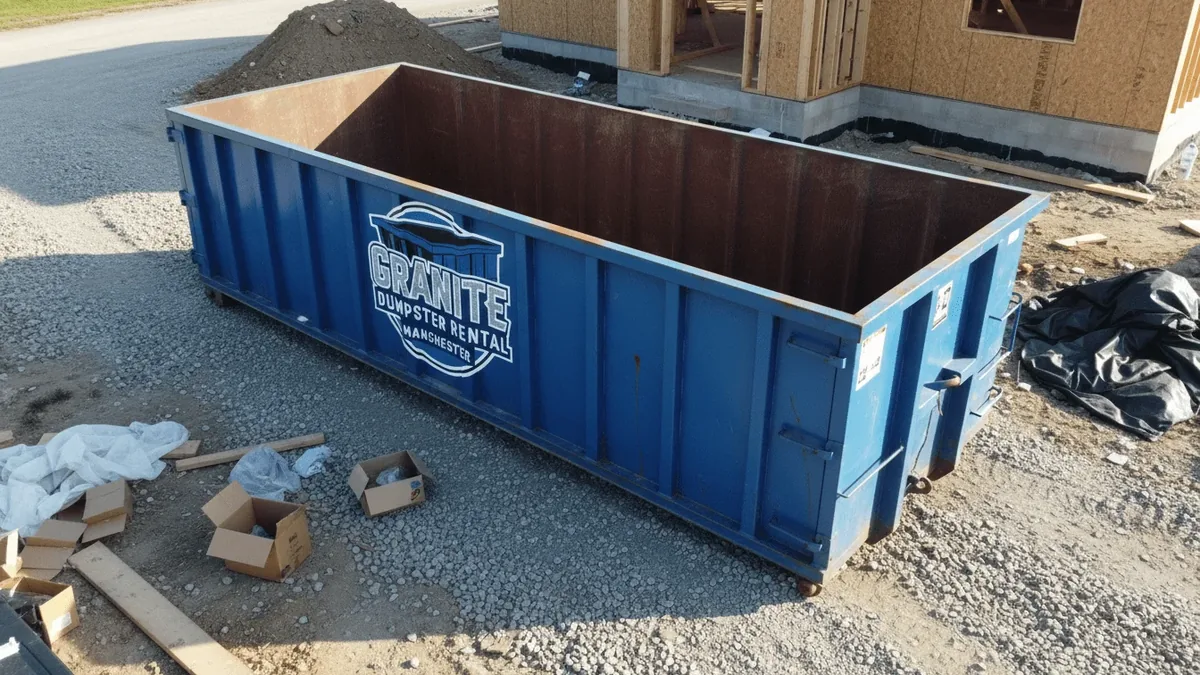
Before we drop a container in your driveway, it's worth five minutes to go over what actually can and can't go in it. Most of what you're throwing out is fine. A short list of items isn't, for reasons that come down to New Hampshire disposal regulations and basic safety at the transfer station — not us being difficult. Here's the rundown we give every customer.
The large majority of household, renovation, and cleanout debris is exactly what roll-off dumpsters are built for: general household junk, furniture, cardboard and packaging, wood scrap, drywall, flooring, carpet, cabinetry, roofing shingles, siding, brush and yard debris (with the exceptions noted below), and construction and demolition material from remodels and tear-outs. If you're not sure whether something specific belongs, that's what our phone number is for — a quick call before you load it is a lot easier than a call after.
To put it more concretely, here's what routinely goes into our containers around Manchester without any issue:
Across every dumpster we deliver in the Manchester area, the following are not allowed:
Some of these are prohibited because they're regulated hazardous waste under state and federal rules — New Hampshire falls under EPA Region 1 (New England) for environmental regulation purposes. Others, like tires and refrigerant-bearing appliances, are excluded because they require separate handling at the disposal end, regardless of which hauler you use. This isn't a Granite Dumpster Rental-specific policy — it's standard across the industry and tied to how transfer stations and landfills are permitted to accept material.
If you're renting specifically for a yard waste or landscaping cleanup, take note: the exclusion list is different from the standard one above. For yard waste, keep these out of the container:
Plain brush, branches, leaves, grass clippings, and untreated wood are fine. The reason treated wood is excluded from yard waste specifically (even though wood scrap is generally accepted in a standard construction dumpster) is that yard waste is often processed differently on the back end — typically composted or mulched — and treated lumber, chemicals, and plastic contaminate that stream in a way they wouldn't in a standard C&D load. See our yard waste dumpster page for more on how we scope those jobs.
Loading a prohibited item into a dumpster isn't just a technicality. Hazardous materials and asbestos in particular can hold up disposal for the whole load, and it puts our drivers and transfer station staff at risk when items like batteries or chemicals end up mixed in with construction debris. If you've got something you're not sure about — old paint cans in the garage, a couple of tires, an old chest freezer — call us at (603) 634-9248 before you load it. We'd rather tell you where it can go than have it show up in the container and cause a problem at pickup.
New Hampshire municipalities and Hillsborough, Rockingham, and Merrimack Counties generally handle hazardous materials, electronics, and similar excluded items through separate collection programs rather than regular roll-off disposal. The right contact for current household hazardous waste collection details is the NH Department of Environmental Services or your local town's public works department — policies and schedules vary by town, so it's worth checking with yours directly rather than assuming Manchester's process applies everywhere in our service area.
If you're staring at a pile and unsure whether something belongs, ask: is it liquid, is it a chemical, is it a battery or tire, or is it something with sealed refrigerant lines? If yes to any of those, set it aside and call us. Everything else — the drywall, the old couch, the roofing tear-off, the cabinetry — is exactly what the dumpster is there for. For project-specific guidance, our construction dumpster rental, junk removal, and estate cleanout pages cover what's typical for each type of job, and our FAQ page has quick answers to the questions we get most.
One question we get often: does everything need to be separated before it goes in? For a standard dumpster rental, no — you can mix general debris types together, which is one of the main reasons people rent a roll-off instead of hauling everything to the transfer station themselves in separate trips. The one place sorting genuinely matters is keeping the prohibited items — and, for yard waste jobs, the separate yard waste exclusions — out of the load entirely. Beyond that, load the container the way that makes sense for your job: flatten what you can, distribute weight evenly across the container rather than piling it all in one corner, and keep loose or lightweight material from blowing out the top.
Estate and full-property cleanouts tend to generate the widest mix of material we see — furniture, appliances, boxes of household goods, and sometimes construction debris from deferred maintenance all at once. The same rules apply: everything on the standard accepted list is fine to mix together, and the standard prohibited list still applies, which matters more than usual on an estate cleanout since older homes are more likely to have things like old paint cans or fuel stored in a garage or shed. Walk the property before the container arrives so you can set aside anything on the prohibited list ahead of time. Our estate cleanout page and estate cleanout checklist go into more detail on planning that kind of project.
FAQs
No. Paint, fuel and oil, chemicals, and solvents are on our standard prohibited list across every dumpster size, along with asbestos, batteries, tires, hazardous or medical waste, and refrigerant-bearing appliances.
No, it's different. Yard waste dumpsters exclude treated or pressure-treated wood, plastic planters, fertilizers, chemicals, and bagged household trash — not the paint/fuel/asbestos list used for standard dumpsters.
Not without the refrigerant evacuated first. Appliances with sealed refrigerant lines — refrigerators, freezers, and AC units — are on the standard prohibited list. Call us and we can point you toward the right disposal option.
Give us a call as soon as you notice. Hazardous items can hold up disposal of the whole load, so it's much easier to sort out before pickup than after. We'd rather help you handle it right than have it become a problem at the transfer station.
Check with your town's public works department or the NH Department of Environmental Services — household hazardous waste collection programs vary by municipality across Hillsborough, Rockingham, and Merrimack Counties.
Ready when you are
Call and you will speak to someone local who knows the streets, the permit rules and which box actually fits your driveway. Flat rate quoted up front.
Keep reading

Private property never needs a permit. Public street placement in Manchester does — here's how the City's Encumbrance Permit works and how nearby towns differ.

Job sites move fast and debris is dense. Here's how to size, load, and schedule a construction dumpster the right way around Manchester.

A room-by-room estate cleanout checklist for Manchester-area families, covering dumpster sizing, sorting keep/donate/dispose, and how to pace the work when it's emotionally heavy.