
Dumpster Placement During Mud Season in Hillsborough County, NH
New Hampshire's mud season brings frost heaves and seasonal road weight restrictions — here's how that affects dumpster delivery timing around Manchester and Hillsborough County.
Manchester dumpster guide
New Hampshire has real experience with major ice storms and nor'easters — here's what changes about dumpster delivery and placement when you're cleaning up storm debris.

New Hampshire doesn't need a hypothetical example when it comes to major ice storms. On December 11–12, 2008, an ice storm hit the region hard enough that at least 400,000 NH customers lost power — a statewide figure, and one of the more significant weather events in the state's recent history. Manchester and the surrounding towns felt that storm along with the rest of New Hampshire, and it's the kind of event that reshapes how you think about storm debris cleanup: limbs down across yards and driveways, damaged fencing, and roofs that needed attention once the ice finally let go. Nor'easters bring smaller versions of the same problem most winters — ice and snow load, downed limbs, gutters and roofing that take damage and need cleanup once the weather clears.
A normal dumpster delivery is straightforward: clear space, flat surface, container down, done. After a storm, a few things change on our end and yours.
Storm debris tends to be scattered across the exact spot where a container would normally sit — downed branches, ice-damaged fencing, sometimes standing water once things start melting. Before we can deliver, that landing area needs to be cleared and reasonably level. If your driveway or yard is still covered in debris, do a first pass to open up the space the truck needs; it makes the difference between a delivery that goes smoothly and one that has to be rescheduled.
Downed limbs, storm-damaged fencing, and debris piles change what a delivery truck can actually reach. We still need the standard roughly 60 feet of clear space to back in and about 25 feet of overhead clearance — but after a storm, it's worth double-checking that path yourself before we arrive, especially if trees or lines came down near the driveway. If access looks uncertain, call us and describe the site; we'd rather talk it through in advance than have a truck arrive to a blocked driveway.
Ice-laden branches and storm-soaked debris weigh more than the same material would on a dry day — sometimes considerably more. What looks like a modest brush pile after an ice storm can load in at well above what the same volume of dry yard waste would weigh. If you're clearing storm damage, size up rather than down, and mention to us on the call that it's storm debris specifically — we'll factor that into the size recommendation.
Storm or no storm, if a container needs to sit on the street rather than on your own driveway or property — which happens more often after a storm, when a driveway itself is blocked by damage — that still requires an Encumbrance Permit through the City of Manchester Streets and Sidewalks Department. The urgency of storm cleanup doesn't change that requirement. Confirm the current fee and process directly with the City of Manchester Streets and Sidewalks Department before placement; we can also walk you through the basics when you call. Our permit guide covers the general process in more detail.
You don't need an event on the scale of the 2008 ice storm to end up needing a container. Nor'easters come through the region most winters, and even a moderate one can bring down enough limbs, damage enough gutters, or shift enough shingles that homeowners are calling us in the days right after to clean up. The same general guidance applies whether the storm made regional news or just knocked a few branches into your yard: clear the landing pad, check truck access, and expect the debris to weigh more than it looks like it should.
Most residential storm debris — downed limbs, damaged fencing, a section of roof or gutter work — fits a 15-yard or 20-yard container. If the storm brought down larger trees or caused structural damage on top of yard debris, we'll talk through a bigger size on the call. Because storm debris runs heavier than dry yard waste, we'd rather size a little generously than have you run short partway through cleanup.
A few minutes walking your own property before you pick up the phone makes the whole process faster. Note where the debris is concentrated, whether your driveway itself is clear or blocked, and whether any lines are down anywhere near where a truck would need to pass — that last one especially, since we won't send a truck near a downed line regardless of how urgent the cleanup feels. If a utility line is down on or near your property, that gets reported to the utility company first; debris cleanup comes after the site is confirmed safe.
We offer same-day and next-day delivery across Manchester, Bedford, Goffstown, Hooksett, Derry, Londonderry, and the rest of our service towns, which matters most right after a storm when everyone in the area is trying to clean up damage at the same time. Call us at (603) 634-9248, describe what came down and where the container needs to sit, and we'll get you scheduled. Our same-day dumpster rental page has more on how fast turnaround works, and if the storm brought down enough debris that you're not sure whether a dumpster or a smaller junk removal trip makes more sense, our junk removal page covers that option too.
FAQs
Yes. The December 11–12, 2008 ice storm was a major regional event that left at least 400,000 NH customers without power statewide. Manchester and the surrounding towns felt that storm along with the rest of the state.
The landing pad needs to be clear and level before we can deliver, truck access is worth double-checking since debris or downed lines can block the usual path, and storm debris typically runs heavier and wetter than dry yard waste of the same volume — all worth mentioning when you call.
Yes. If the container needs to sit on the street rather than your driveway, you still need an Encumbrance Permit through the City of Manchester Streets and Sidewalks Department, storm or no storm. Confirm the current fee and process with that department directly.
Ice-laden branches and storm-soaked debris carry extra water weight compared to the same material on a dry day. A brush pile that looks modest after an ice storm can weigh noticeably more than dry yard debris of the same size, so it's worth sizing up.
We offer same-day and next-day delivery across Manchester and our full service area. Right after a storm, call as early as you can — describe what came down and where you need the container placed, and we'll work you into the schedule.
Ready when you are
Call and you will speak to someone local who knows the streets, the permit rules and which box actually fits your driveway. Flat rate quoted up front.
Keep reading

New Hampshire's mud season brings frost heaves and seasonal road weight restrictions — here's how that affects dumpster delivery timing around Manchester and Hillsborough County.

A general guide to recycling and responsible disposal in Hillsborough County and greater Manchester — what typically gets diverted, and where to go for specifics.
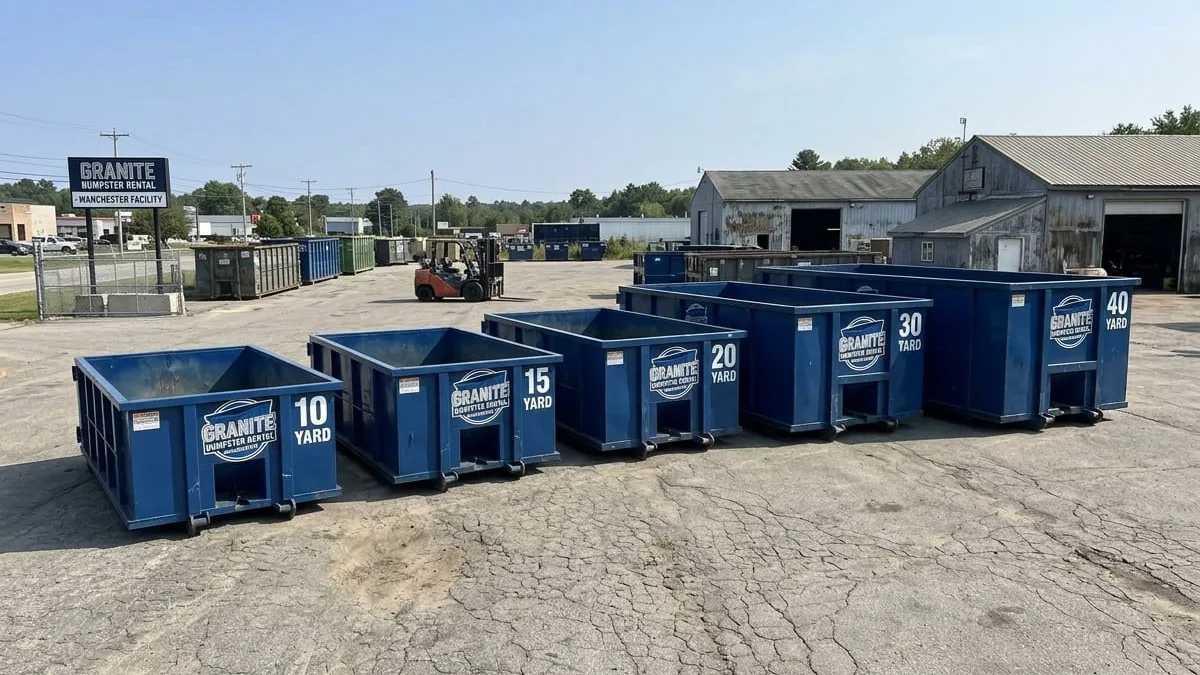
From a single bathroom gut to a full demolition site, here's how to match your Manchester-area project to the right dumpster size — 10-yard through 40-yard.